
August 7, 2026
Green, Yellow, or Black: What the Color of Your Pool Algae Is Actually Telling You
Green, yellow, and black pool algae each need different treatment. HT Pool Solutions explains how to spot and clear each type fast.
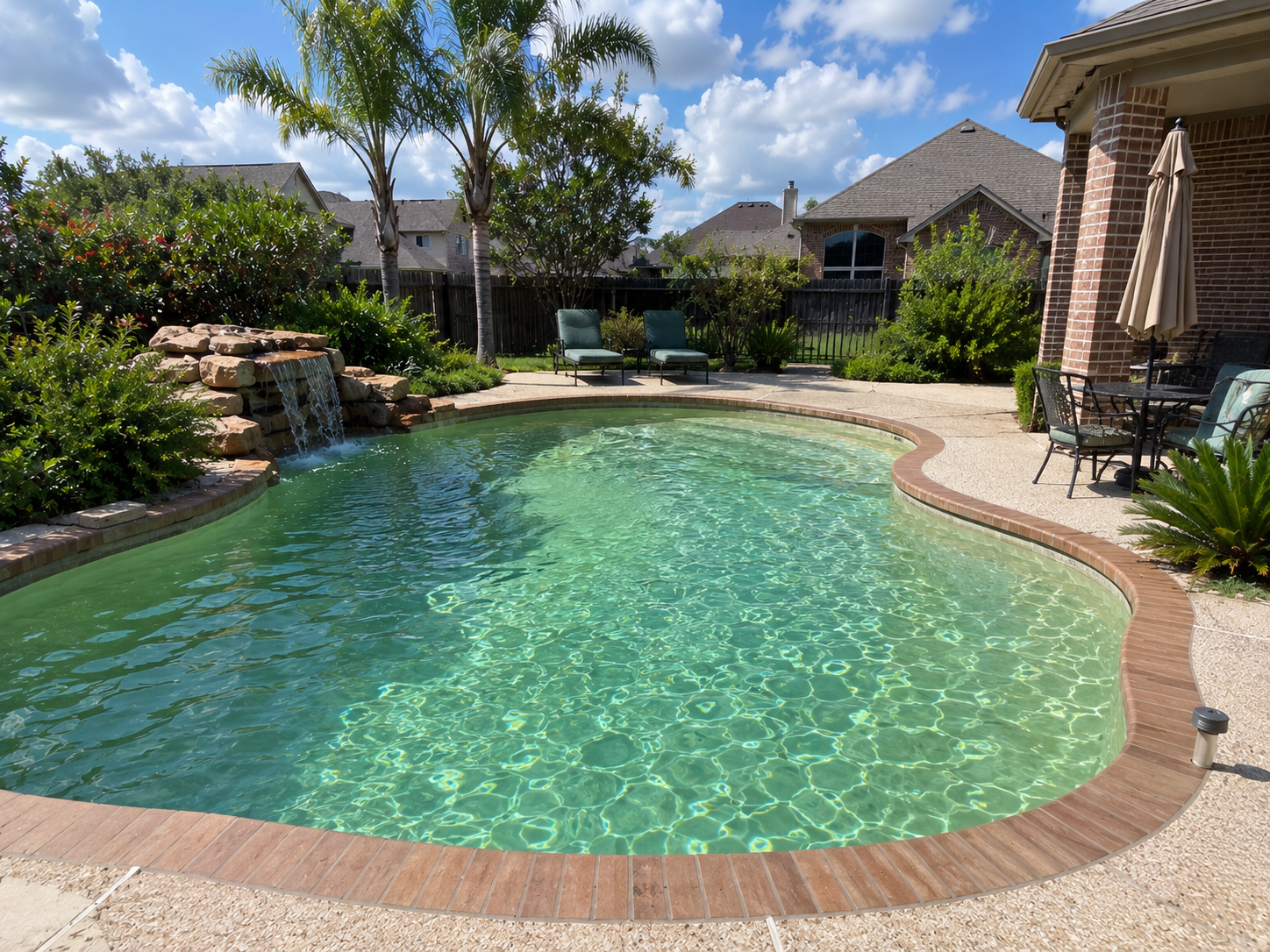
Not all pool algae is the same problem wearing a different color. If you have ever stood at the edge of your pool trying to decide whether that tint in the water is something you can shock away in an afternoon or something that is going to eat your whole weekend, you already understand why this matters. At HT Pool Solutions, we get calls about algae more than almost anything else, and one of the first questions we ask every homeowner in Katy, Richmond, Fulshear, and Rosenberg is simple: what color is it?
That question is not small talk. Green, yellow, and black algae behave differently, hide in different parts of your pool, and respond to different treatments. Treating one type like it is another is how homeowners end up dumping chemicals into their water for days with nothing to show for it.
Why Texas Heat Makes Algae Such a Recurring Problem
Algae needs three things to thrive: warmth, sunlight, and nutrients like phosphates or nitrates in the water. The Houston area gives it all three for a big chunk of the year. Summers here run long, humid, and hot, which means pool water often sits in that ideal 75 to 85 degree range for months at a time.
Add in the occasional rainstorm washing debris and organic matter into the pool, a filter that has not been cleaned recently, or chlorine levels that dipped for a few days while you were out of town, and algae has everything it needs to take hold fast. It is not a sign of a dirty pool owner. It is a sign of Texas weather doing what Texas weather does.
Green Algae: The One Almost Everyone Deals With Eventually
Green algae is by far the most common type we treat across Katy and the surrounding area. It floats freely in the water, which is why a pool with green algae often looks cloudy or murky rather than having visible clumps stuck to a surface. In more advanced cases, it clings loosely to walls and steps, wiping away easily with a brush.
The good news is that green algae is also the easiest to treat. A proper shock treatment, paired with brushing the walls and running the filter continuously until the water clears, usually resolves it within a day or two. The mistake we see most often is homeowners shocking the pool once, seeing it improve slightly, and stopping there. Green algae needs sustained chlorine levels for at least 24 hours to fully die off, not just a quick spike.
Common Green Algae Triggers
- Chlorine levels that dropped below 1 ppm for more than a day or two
- Heavy rain diluting sanitizer and introducing organic debris
- A filter that has not been backwashed or cleaned in several weeks
- pH sitting outside the 7.2 to 7.6 range for an extended period
Yellow Algae: The Stubborn One People Mistake for Pollen
Yellow algae, sometimes called mustard algae, is one of the more frustrating types because it is easy to misdiagnose. It often looks like a dusting of sand or pollen along the pool walls, particularly in shaded areas or spots with less water circulation. Homeowners brush it off, it seems to disappear, and then it is back within a day.
That reappearing pattern is the biggest clue you are dealing with yellow algae rather than green. Yellow algae is resistant to normal chlorine levels in a way that green algae is not, and it clings stubbornly to surfaces, equipment, and even swimsuits and pool toys. If it is not fully eliminated everywhere it has spread, it will reintroduce itself into the water within days.
Treating yellow algae properly usually requires a higher concentration shock than green algae, combined with a specific algaecide formulated for mustard algae rather than a general purpose product. We also recommend cleaning or replacing anything porous that was in the pool during the outbreak, including certain pool toys and brushes, since yellow algae spores can survive on these items.
Black Algae: The One That Actually Requires the Most Work
Black algae is the type that tends to worry homeowners the most, and honestly, it should get your attention faster than the other two. It shows up as small dark spots, usually blue green to black, often in cracks, rough concrete surfaces, or areas along the pool where the surface texture gives it something to grip onto.
What makes black algae difficult is its structure. It develops a protective outer layer that shields it from chlorine, with roots that can extend into porous pool surfaces like plaster or gunite. Brushing the surface alone will not remove it, because the visible spot is just the top layer of something anchored deeper.
Effective treatment for black algae almost always involves a combination approach. This typically means aggressively brushing the affected areas with a stiff, algae specific brush to break through that protective layer, followed by a concentrated shock treatment and an algaecide designed specifically for black algae. In more established cases, this process needs to be repeated over several days, and the pool filter needs constant attention during that stretch to keep dead algae from recirculating.
Signs You Are Dealing With Black Algae, Not Just Staining
- Dark spots that feel slightly raised or bumpy rather than flat when you run a finger over them
- Spots that return in the same exact location even after brushing
- Concentration in shaded areas, corners, or rough surface patches
- Resistance to standard chlorine shock that clears other algae types within a day
Why Regular Maintenance Beats Reactive Treatment Every Time
Every algae type we have covered has one thing in common. It is far easier and cheaper to prevent than to treat once it has taken hold. Consistent chlorine levels, weekly brushing even when the pool looks clean, regular filter cleaning, and balanced pH are not exciting tasks, but they are what keeps a pool in Fulshear or Rosenberg from turning green the first week the temperature climbs into the upper 90s.
We also see a lot of algae problems trace back to circulation issues that homeowners never notice, like a return jet pointed the wrong direction or a dead spot near steps and ladders where water barely moves. These small gaps in circulation give algae a quiet corner to establish itself before anyone spots it.
When It Makes Sense to Call in a Professional
A mild case of green algae is something plenty of homeowners can handle with the right products and a little patience. Yellow and black algae are a different story, largely because misidentifying them or under treating them wastes both time and money on chemicals that were never going to solve the actual problem.
If you have tried shocking your pool more than once and the algae keeps coming back, or you are seeing the dark, gripping spots associated with black algae, that is usually the point where a professional eye saves you more than it costs. Our technicians across Katy, Richmond, Fulshear, and Rosenberg see these patterns constantly, and identifying the exact type early prevents a small patch from spreading across the entire pool surface.
Frequently Asked Questions
How can I tell the difference between green and yellow algae?
Green algae typically clouds the water and makes it look murky, while yellow algae tends to sit as a dusty, sand like layer on walls and surfaces, especially in shaded spots. Yellow algae also reappears quickly after brushing, which green algae usually does not do once properly shocked.
Is black algae dangerous to swim in?
Black algae itself is not typically dangerous to health, but it often signals deeper sanitation issues and can harbor bacteria within its protective layers. It is best treated promptly rather than swum around for an extended period.
How long does it take to get rid of pool algae?
Green algae often clears within one to two days with proper shock treatment and continuous filtration. Yellow and black algae usually take longer, sometimes several days to over a week, because of their resistance to standard chlorine levels.
Why does my pool keep getting algae even though I shock it regularly?
This usually points to an underlying issue such as inconsistent chlorine levels between shocks, poor water circulation in certain areas, a filter that needs cleaning, or an algae type like yellow or black that requires more targeted treatment than a standard shock.
Can I use the same algaecide for all three types of algae?
No. General algaecides work reasonably well on green algae but are often ineffective against yellow and black algae, which require formulas specifically designed to address their resistant structures. Using the wrong product usually just delays proper treatment.
How often should I brush my pool to prevent algae?
Brushing walls, steps, and corners at least once a week, even when the pool looks clear, helps prevent algae from establishing itself in the first place, particularly in shaded or low circulation areas where it tends to start.
Getting Your Water Back to Normal
Algae in your pool is frustrating, but it is rarely a mystery once you know what you are looking at. Green, yellow, and black algae each leave their own clues, and treating the right problem the right way is what actually gets your water clear instead of just masking the issue for a few days.
If algae keeps showing up in your pool no matter what you try, or you would rather have someone experienced take a look before it spreads further, HT Pool Solutions is here to help homeowners across Katy, Richmond, Fulshear, and Rosenberg get their water back to normal. Reach out to schedule a consultation and let us take a closer look at what your pool needs.
Know more how we treat drainage problems
{ "@context": "https://schema.org", "@graph": [ { "@type": "Article", "headline": "Green, Yellow, or Black: What the Color of Your Pool Algae Is Actually Telling You", "mainEntityOfPage": { "@type": "WebPage", "@id": "https://www.htpoolsolutions.com/blog/green-yellow-or-black-what-the-color-of-your-pool-algae-is-actually-telling-you" }, "author": { "@type": "Organization", "name": "HT Pool Solutions" }, "publisher": { "@type": "Organization", "name": "HT Pool Solutions" }, "about": "Identifying and treating green, yellow, and black pool algae", "areaServed": ["Katy, TX", "Richmond, TX", "Fulshear, TX", "Rosenberg, TX"] }, { "@type": "FAQPage", "mainEntityOfPage": { "@type": "WebPage", "@id": "https://www.htpoolsolutions.com/blog/green-yellow-or-black-what-the-color-of-your-pool-algae-is-actually-telling-you" }, "mainEntity": [ { "@type": "Question", "name": "How can I tell the difference between green and yellow algae?", "acceptedAnswer": { "@type": "Answer", "text": "Green algae typically clouds the water and makes it look murky, while yellow algae tends to sit as a dusty, sand like layer on walls and surfaces, especially in shaded spots. Yellow algae also reappears quickly after brushing, which green algae usually does not do once properly shocked." } }, { "@type": "Question", "name": "Is black algae dangerous to swim in?", "acceptedAnswer": { "@type": "Answer", "text": "Black algae itself is not typically dangerous to health, but it often signals deeper sanitation issues and can harbor bacteria within its protective layers. It is best treated promptly rather than swum around for an extended period." } }, { "@type": "Question", "name": "How long does it take to get rid of pool algae?", "acceptedAnswer": { "@type": "Answer", "text": "Green algae often clears within one to two days with proper shock treatment and continuous filtration. Yellow and black algae usually take longer, sometimes several days to over a week, because of their resistance to standard chlorine levels." } }, { "@type": "Question", "name": "Why does my pool keep getting algae even though I shock it regularly?", "acceptedAnswer": { "@type": "Answer", "text": "This usually points to an underlying issue such as inconsistent chlorine levels between shocks, poor water circulation in certain areas, a filter that needs cleaning, or an algae type like yellow or black that requires more targeted treatment than a standard shock." } }, { "@type": "Question", "name": "Can I use the same algaecide for all three types of algae?", "acceptedAnswer": { "@type": "Answer", "text": "No. General algaecides work reasonably well on green algae but are often ineffective against yellow and black algae, which require formulas specifically designed to address their resistant structures. Using the wrong product usually just delays proper treatment." } }, { "@type": "Question", "name": "How often should I brush my pool to prevent algae?", "acceptedAnswer": { "@type": "Answer", "text": "Brushing walls, steps, and corners at least once a week, even when the pool looks clear, helps prevent algae from establishing itself in the first place, particularly in shaded or low circulation areas where it tends to start." } } ] } ]
}

Call Us: (832) 868-4161