
July 16, 2026
Salt vs Chlorine Pool Systems: Which Is Right for Your Katy Backyard?
Salt or chlorine for your Katy pool? Here's the real cost, maintenance, and comfort differences to help you decide.
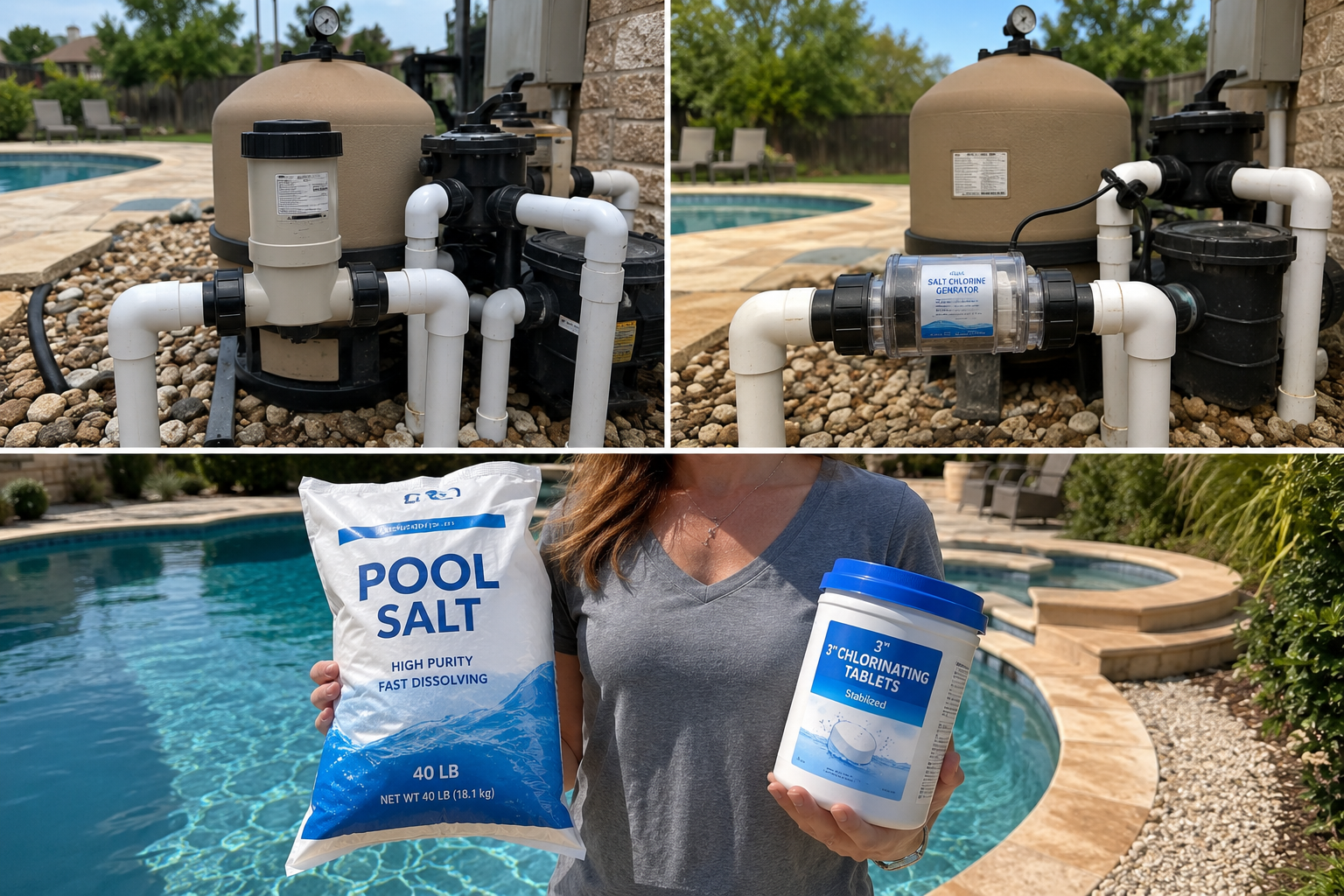
Standing in the pool aisle debating chemicals is not where most homeowners want to spend their Saturday. Yet here you are, trying to make the right call between two options that both promise to keep your backyard pool clean all summer long. Salt vs chlorine pool systems is one of the most common questions we get at HT Pool Solutions. We hear it from new pool owners in Katy and from homeowners remodeling older backyards in Richmond alike. Here is the honest breakdown, without the sales pitch.
What Each System Actually Does
Both systems use chlorine to sanitize your water. That surprises a lot of people. The real difference is where that chlorine comes from.
A traditional chlorine pool relies on you adding chlorine directly. Most homeowners do this through tablets, liquid, or granular shock. A saltwater pool uses a salt cell to generate chlorine from dissolved salt, so you are still swimming in chlorinated water either way. The salt itself is not what sanitizes your pool.
A Common Misconception Worth Clearing Up
Many homeowners think saltwater pools have no chlorine at all. That is simply not true. It is one of the most persistent myths in the pool industry. A salt system just automates the process. It converts salt into chlorine continuously, instead of you adding it by hand every few days.
Upfront Cost Differences
Traditional chlorine systems cost less to install. This is the biggest reason many homeowners start there. You are just adding a feed system, or relying on manual dosing. There is no added equipment like a salt system requires.
Salt systems typically cost $1,500 to $2,500 more upfront, mainly due to the salt cell and control unit. For a new pool build in Katy or Fulshear, that difference is often worth folding into the original construction budget. Retrofitting later almost always costs more.
Ongoing Maintenance and Costs
This is where the two systems really start to differ from each other. Traditional chlorine pools need regular chemical purchases. Those costs add up steadily throughout a long Texas swim season.
Salt systems reduce how often you buy chlorine directly. The cell produces it on demand, right in your own equipment pad. However, salt cells do not last forever. They need replacement every 3 to 7 years, running $400 to $800 depending on the brand and size. Neither system is maintenance free, they just simply shift where the maintenance happens.
What We See Homeowners Get Wrong
Some Richmond homeowners assume switching to salt means no more trips to the pool store. That assumption usually does not hold up. You still need to balance pH, alkalinity, and stabilizer. Regular water testing still matters too, salt system or not. Salt just removes one specific task from the list. It does not remove the whole maintenance routine.
Comfort and Skin Feel
This is the real reason most homeowners actually switch systems. Saltwater pools feel noticeably softer on skin and eyes than traditional chlorine pools do.
Traditional chlorine can leave skin feeling dry and eyes feeling irritated. This happens especially when levels swing high right after shocking. Saltwater pools maintain more consistent, lower chlorine levels overall. That consistency is exactly why families with young kids or sensitive skin often prefer them.
Equipment Considerations
Saltwater is more corrosive to certain metal components than fresh water is. Pool equipment, ladders, and even some deck fixtures need to be rated for saltwater use. Otherwise, they wear out faster than expected.
This matters most for older pools being converted from chlorine to salt. Before switching, we check whether existing equipment, handrails, and fixtures can handle salt exposure. Replacing incompatible equipment adds real cost to a conversion project, so this step matters.
What You Will Actually Buy at the Pool Store
Chlorine pool owners typically stock up on chlorine tablets, shock, and stabilizer throughout the season. That means regular trips, especially during peak Texas summer heat when demand climbs.
Salt pool owners buy less chlorine directly, but they still need pool salt to top off levels periodically, along with the same balancing chemicals every pool needs. The shopping list gets shorter with salt, but it never disappears entirely.
We carry both saltwater and traditional chlorine products in our store, so switching systems does not mean switching where you shop. Either way, having a trusted source for testing and balancing chemicals makes the whole process easier, regardless of which system you land on.
Which System Fits Different Situations
Neither system is universally better. The right choice depends entirely on your specific situation and priorities.
* Choose chlorine if you want the lowest upfront cost and do not mind manual dosing
* Choose salt if skin comfort and reduced daily chemical handling matter more to you than upfront price
* Consider your equipment age before converting an existing chlorine pool to salt
* Factor in your swim season length, since Katy's long swim season means more total system use either way
Converting an Existing Pool to Salt
If you already have a chlorine pool and want to switch, conversion is usually more straightforward than people expect. It typically involves installing a salt cell and control unit. Then we add the correct amount of salt to your water.
Most conversions take a single day for the equipment installation. The water still needs time afterward to reach proper salt levels. We always inspect existing equipment first, since older pumps, heaters, or fixtures not rated for salt exposure may need replacement as part of the project.
Salt System Sizing Matters More Than People Think
Not every salt cell fits every pool. Cells are rated for specific pool volumes, and an undersized cell struggles to keep up during peak Katy summer heat, when chlorine demand climbs fast.
An oversized cell, on the other hand, wastes money without meaningful benefit. Getting the sizing right the first time saves both frustration and cash down the road. We calculate this based on your actual pool volume, not a rough estimate, before recommending a specific system.
Frequently Asked Questions
Is a saltwater pool actually chlorine free?
No. A saltwater pool still uses chlorine to sanitize the water. The salt cell simply generates that chlorine from dissolved salt instead of you adding it manually through tablets or liquid.
How much does it cost to convert a chlorine pool to salt in the Katy area?
Conversion costs typically run $1,500 to $2,500, covering the salt cell, control unit, and installation labor. Additional costs may apply if existing equipment needs replacement to handle saltwater exposure.
How often do salt cells need to be replaced?
Most salt cells last 3 to 7 years depending on usage and water balance. Replacement typically costs $400 to $800, and neglecting water balance can shorten a cell's lifespan significantly.
Is saltwater bad for pool equipment?
Saltwater can be more corrosive to certain metal components not rated for salt exposure. This is why checking equipment compatibility matters before converting an existing chlorine pool to a salt system.
Do saltwater pools really feel different than chlorine pools?
Yes, most swimmers notice a real difference. Saltwater pools tend to feel softer on skin and less irritating to eyes, mainly because chlorine levels stay more consistent instead of spiking after manual dosing or shock treatments.
Which system is cheaper in the long run, salt or chlorine?
It depends on usage. Chlorine costs less upfront but requires ongoing chemical purchases. Salt costs more upfront but reduces daily chemical handling, with the main recurring cost being cell replacement every several years.
Still deciding between salt and chlorine for your Katy or Richmond backyard pool? Book a consultation with HT Pool Solutions and we will walk through which system actually fits your pool, your budget, and how you use it.
Know more how we treat drainage problems
{ "@context": "https://schema.org", "@graph": [ { "@type": "Article", "headline": "Salt vs Chlorine Pool Systems: Which Is Right for Your Katy Backyard?", "description": "Comparing salt vs chlorine pool systems for your Katy backyard? See the real cost and maintenance differences. Book a consultation.", "image": "https://cdn.prod.website-files.com/67b768417ef0167c54e117eb/6a59188b16716b9c1b4a6784_salt%20or%20chlorine%20pool%20system.png", "datePublished": "2026-07-16", "dateModified": "2026-07-16", "mainEntityOfPage": { "@type": "WebPage", "@id": "https://www.htpoolsolutions.com/blog/salt-vs-chlorine-pool-systems-which-is-right-for-your-katy-backyard" }, "author": { "@type": "Organization", "name": "HT Pool Solutions" }, "publisher": { "@type": "Organization", "name": "HT Pool Solutions", "logo": { "@type": "ImageObject", "url": "https://cdn.prod.website-files.com/67b768417ef0167c54e117dd/67b8d1b311d132b750b728cc_ht-logo.webp" } }, "url": "https://www.htpoolsolutions.com/blog/salt-vs-chlorine-pool-systems-which-is-right-for-your-katy-backyard" }, { "@type": "FAQPage", "mainEntity": [ { "@type": "Question", "name": "Is a saltwater pool actually chlorine free?", "acceptedAnswer": { "@type": "Answer", "text": "No. A saltwater pool still uses chlorine to sanitize the water. The salt cell simply generates that chlorine from dissolved salt instead of you adding it manually through tablets or liquid." } }, { "@type": "Question", "name": "How much does it cost to convert a chlorine pool to salt in the Katy area?", "acceptedAnswer": { "@type": "Answer", "text": "Conversion costs typically run $1,500 to $2,500, covering the salt cell, control unit, and installation labor. Additional costs may apply if existing equipment needs replacement to handle saltwater exposure." } }, { "@type": "Question", "name": "How often do salt cells need to be replaced?", "acceptedAnswer": { "@type": "Answer", "text": "Most salt cells last 3 to 7 years depending on usage and water balance. Replacement typically costs $400 to $800, and neglecting water balance can shorten a cell's lifespan significantly." } }, { "@type": "Question", "name": "Is saltwater bad for pool equipment?", "acceptedAnswer": { "@type": "Answer", "text": "Saltwater can be more corrosive to certain metal components not rated for salt exposure. This is why checking equipment compatibility matters before converting an existing chlorine pool to a salt system." } }, { "@type": "Question", "name": "Do saltwater pools really feel different than chlorine pools?", "acceptedAnswer": { "@type": "Answer", "text": "Yes, most swimmers notice a real difference. Saltwater pools tend to feel softer on skin and less irritating to eyes, mainly because chlorine levels stay more consistent instead of spiking after manual dosing or shock treatments." } }, { "@type": "Question", "name": "Which system is cheaper in the long run, salt or chlorine?", "acceptedAnswer": { "@type": "Answer", "text": "It depends on usage. Chlorine costs less upfront but requires ongoing chemical purchases. Salt costs more upfront but reduces daily chemical handling, with the main recurring cost being cell replacement every several years." } } ] } ]
}

Call Us: (832) 868-4161