
October 13, 2026
Signs Your Katy Pool Needs Replastering
The signs your Katy pool needs replastering, what the process involves, and how to choose a new interior finish.
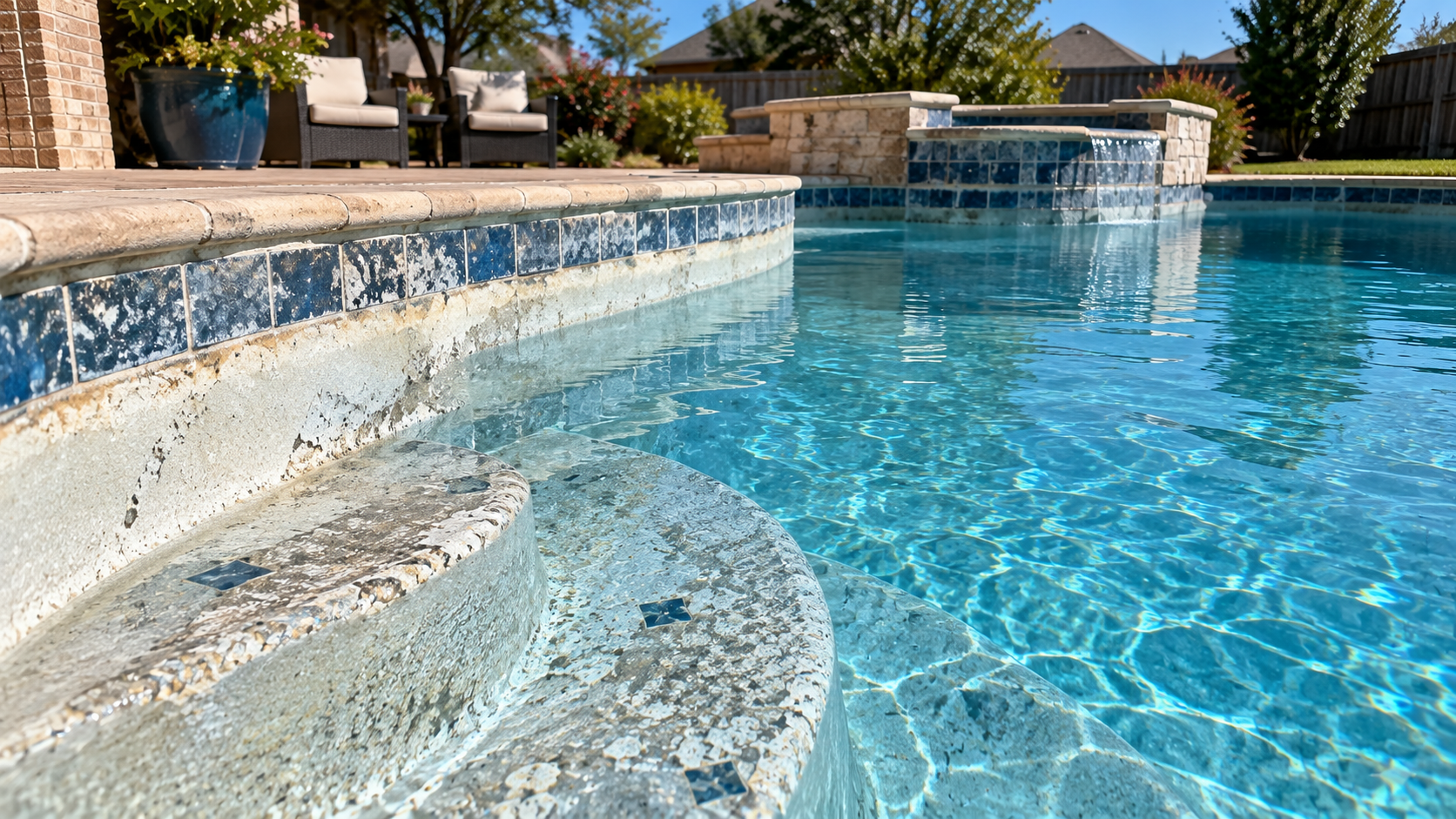
Pool replastering in Katy, TX is one of those projects homeowners tend to put off until the signs are impossible to ignore. Rough spots scrape feet. Stains refuse to scrub out. Eventually, the whole pool just looks tired.
At HT Pool Solutions, we help homeowners in Katy, Richmond, and Fulshear decide when it's time for a fresh interior finish. Catching the warning signs early often means a simpler project and fewer surprises. Waiting too long can let small surface problems turn into bigger ones underneath.
This guide covers the signs your pool needs replastering, what the process looks like, and how to choose a finish that fits your backyard.
How Long Does Pool Plaster Last?
No pool finish lasts forever. Standard white plaster often holds up for roughly a decade, while quartz and pebble finishes typically last longer. However, those ranges assume the water has been well cared for.
What Shortens a Finish's Life
Several everyday factors wear plaster down faster:
- Unbalanced water, especially low pH or low calcium, which slowly dissolves the surface
- Intense summer heat and sun, which speeds up chemical reactions in the water
- Heavy rain, which can throw chemistry off balance quickly
- Harsh cleaning methods, including repeated acid washes
Gulf Coast summers check several of those boxes at once. That's why two pools built the same year can age very differently depending on how the water was managed.
Signs Your Pool Needs Replastering
Some wear is cosmetic. Other signs mean the finish is no longer protecting the shell underneath. Here is what to look for.
Rough Texture
A healthy finish feels smooth underfoot. When the surface starts snagging swimsuits or scraping toes, the top layer has worn away. Rough plaster also gives algae more places to cling.
Stains That Won't Come Out
Metal stains, mineral deposits, and organic stains can often be treated. However, when brushing and chemical treatments stop working, the stain may have set into worn plaster.
Etching and Pitting
Etching looks like a dull, uneven surface with tiny pits. It usually comes from water that stayed out of balance too long. Once it spreads, a fresh finish is often the only real fix.
Delamination and Hollow Spots
Sometimes the plaster separates from the shell beneath it. You may notice bubbled areas, flaking, or a hollow sound when you tap the surface. Delamination tends to spread, so it's worth addressing sooner rather than later.
Exposed Shell or Gray Patches
Dark gray spots can mean the finish has worn thin enough to expose the gunite below. At that point, the shell itself is no longer protected from the water.
What the Replastering Process Involves
Replastering is more involved than a fresh coat of paint. Here is the general sequence most projects follow.
- Inspection and planning. We check the surface, tile, coping, and equipment to see what else needs attention while the pool is empty.
- Draining the pool. This step needs care in the Katy area, where groundwater can rise after heavy rain. An empty pool sitting on saturated soil can be pushed upward by that pressure, so timing and proper relief matter.
- Surface preparation. Old, loose plaster is removed or roughened so the new finish bonds properly.
- Applying the new finish. Crews apply the plaster, quartz, or pebble surface in a single, continuous effort.
- Refilling and startup. The pool refills right away. Then the water chemistry is carefully managed, with regular brushing during the first few weeks.
That startup period matters more than most homeowners realize. Careful chemistry during those first weeks helps the new finish cure evenly and last longer.
The pool being empty is also a smart time to replace waterline tile or update lighting. Combining projects avoids draining the pool twice.
Choosing a New Finish
Replastering is a chance to upgrade, not just repair. Most Katy homeowners choose from three main finish types.
Standard Plaster
Classic white plaster gives water that bright, crisp blue look. It is usually the most budget friendly option. On the other hand, it tends to show stains and wear sooner than other finishes.
Quartz Finishes
Quartz blends crushed quartz into the plaster mix. The result is a tougher surface that resists staining and etching better than standard plaster. It also comes in a wider range of colors.
Pebble Finishes
Pebble finishes use small stones for a natural, textured surface. They are typically the most durable choice. Some swimmers love the texture, while others prefer something smoother underfoot.
The right choice depends on how you use your pool, how long you plan to stay in the home, and the look you want. We're happy to show samples and talk through the trade offs.
The Best Time to Replaster in Katy
Many homeowners wait until spring to think about pool projects. By then, everyone else is thinking about it too. Fall and winter are often the smartest window for replastering in the Houston area.
There are a few reasons for that. Cooler temperatures are easier on a curing finish than peak summer heat. Scheduling also tends to be more flexible outside the busy season. Best of all, the pool is ready to enjoy when swim season starts instead of sitting empty during it.
Here is a pattern we see every year. A homeowner notices rough spots in August, waits until May to call, and spends part of the next summer with a drained pool. Starting the conversation in the off season avoids that trade off entirely.
Pool Replastering FAQ
How do I know if my pool needs replastering?
Common signs include rough texture, stains that won't come out, etching, flaking, hollow spots, and gray patches where the shell shows through. If several of these appear together, it's usually time for an inspection.
How long does pool plaster last?
Standard plaster often lasts roughly a decade, while quartz and pebble finishes typically last longer. Water chemistry, heat, and cleaning habits all affect how long any finish holds up.
Is it safe to drain a pool in Katy?
It can be, but it should be done carefully. Groundwater can rise after heavy rain and push upward on an empty pool. A professional will time the drain and manage that pressure properly.
What is the best time of year to replaster a pool in Texas?
Fall and winter are often ideal. Cooler weather is easier on a curing finish, and the pool is ready before swim season begins.
Does HT Pool Solutions serve Fulshear and Richmond?
Yes. HT Pool Solutions provides pool remodels and replastering in Katy, Richmond, Fulshear, and nearby communities. Contact the team to confirm service for your address.
Book a Replastering Consultation
A worn finish doesn't just look rough. It can also make your pool harder to keep clean and leave the shell exposed. A fresh surface restores both the look and the protection your pool needs.
HT Pool Solutions handles pool remodels and replastering for homeowners in Katy, Richmond, and Fulshear. Book a consultation today, and we'll inspect your current finish and walk you through your options.
Know more how we treat drainage problems
{ "@context": "https://schema.org", "@graph": [ { "@type": "Article", "headline": "Signs Your Katy Pool Needs Replastering (And What the Process Involves)", "description": "Pool replastering in Katy, TX starts with knowing the signs. HT Pool Solutions explains the process and your finish options. Book a consultation.", "author": { "@type": "Organization", "name": "HT Pool Solutions", "url": "https://www.htpoolsolutions.com/" }, "publisher": { "@type": "Organization", "name": "HT Pool Solutions", "url": "https://www.htpoolsolutions.com/" }, "datePublished": "2026-10-13", "mainEntityOfPage": "https://www.htpoolsolutions.com/blog/signs-your-katy-pool-needs-replastering" }, { "@type": "FAQPage", "mainEntity": [ { "@type": "Question", "name": "How do I know if my pool needs replastering?", "acceptedAnswer": { "@type": "Answer", "text": "Common signs include rough texture, stains that won't come out, etching, flaking, hollow spots, and gray patches where the shell shows through. If several of these appear together, it's usually time for an inspection." } }, { "@type": "Question", "name": "How long does pool plaster last?", "acceptedAnswer": { "@type": "Answer", "text": "Standard plaster often lasts roughly a decade, while quartz and pebble finishes typically last longer. Water chemistry, heat, and cleaning habits all affect how long any finish holds up." } }, { "@type": "Question", "name": "Is it safe to drain a pool in Katy?", "acceptedAnswer": { "@type": "Answer", "text": "It can be, but it should be done carefully. Groundwater can rise after heavy rain and push upward on an empty pool. A professional will time the drain and manage that pressure properly." } }, { "@type": "Question", "name": "What is the best time of year to replaster a pool in Texas?", "acceptedAnswer": { "@type": "Answer", "text": "Fall and winter are often ideal. Cooler weather is easier on a curing finish, and the pool is ready before swim season begins." } }, { "@type": "Question", "name": "Does HT Pool Solutions serve Fulshear and Richmond?", "acceptedAnswer": { "@type": "Answer", "text": "Yes. HT Pool Solutions provides pool remodels and replastering in Katy, Richmond, Fulshear, and nearby communities. Contact the team to confirm service for your address." } } ] } ]
}

Call Us: (832) 868-4161